
Year
2024
Role
Lead designer across conversational UX, service design, and AI adoption strategy. Including user workshops, stakeholder alignment, and cross-team collaboration
Team & Stakeholders
IBM | T-Mobile
The problem with "just add AI"
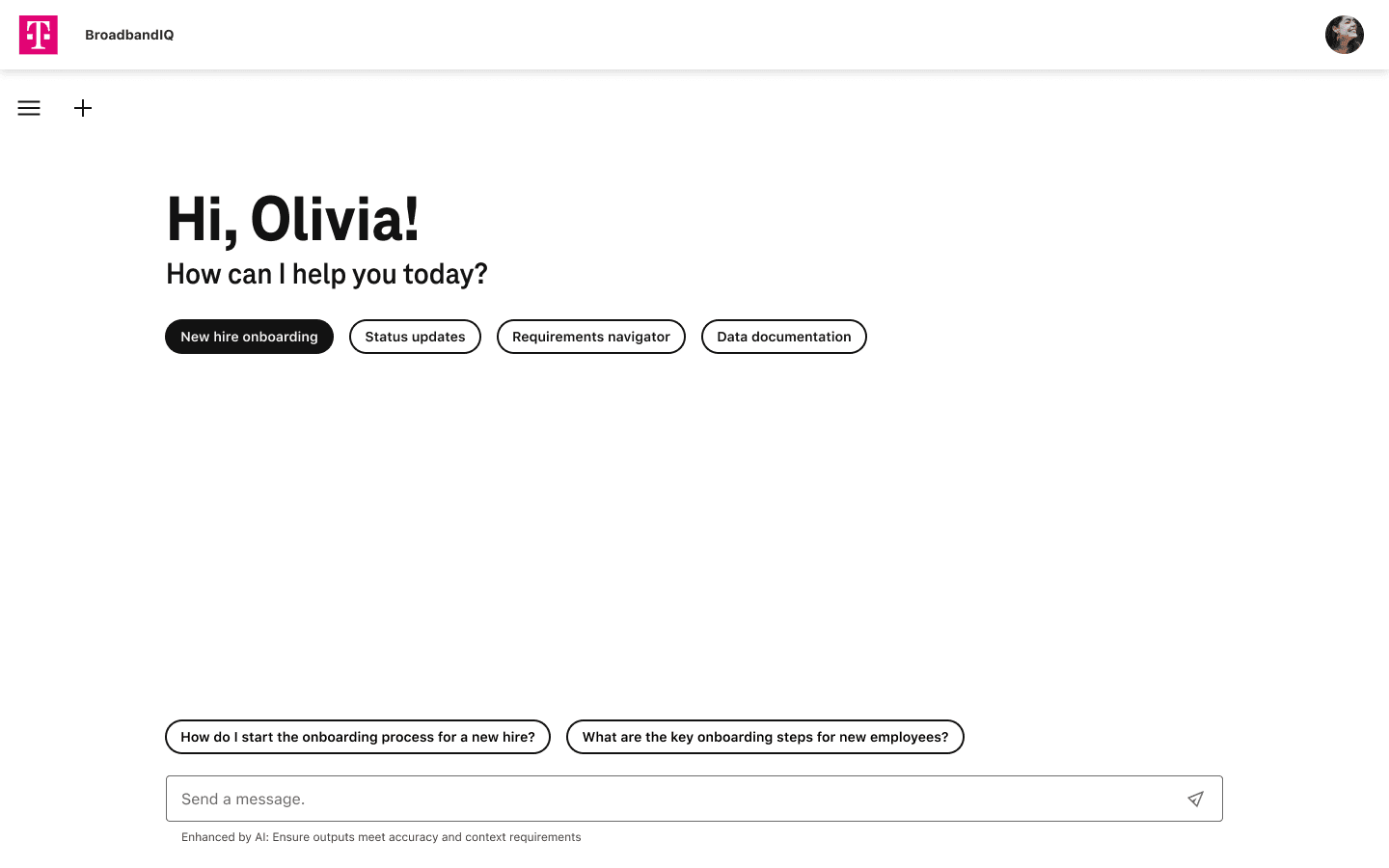
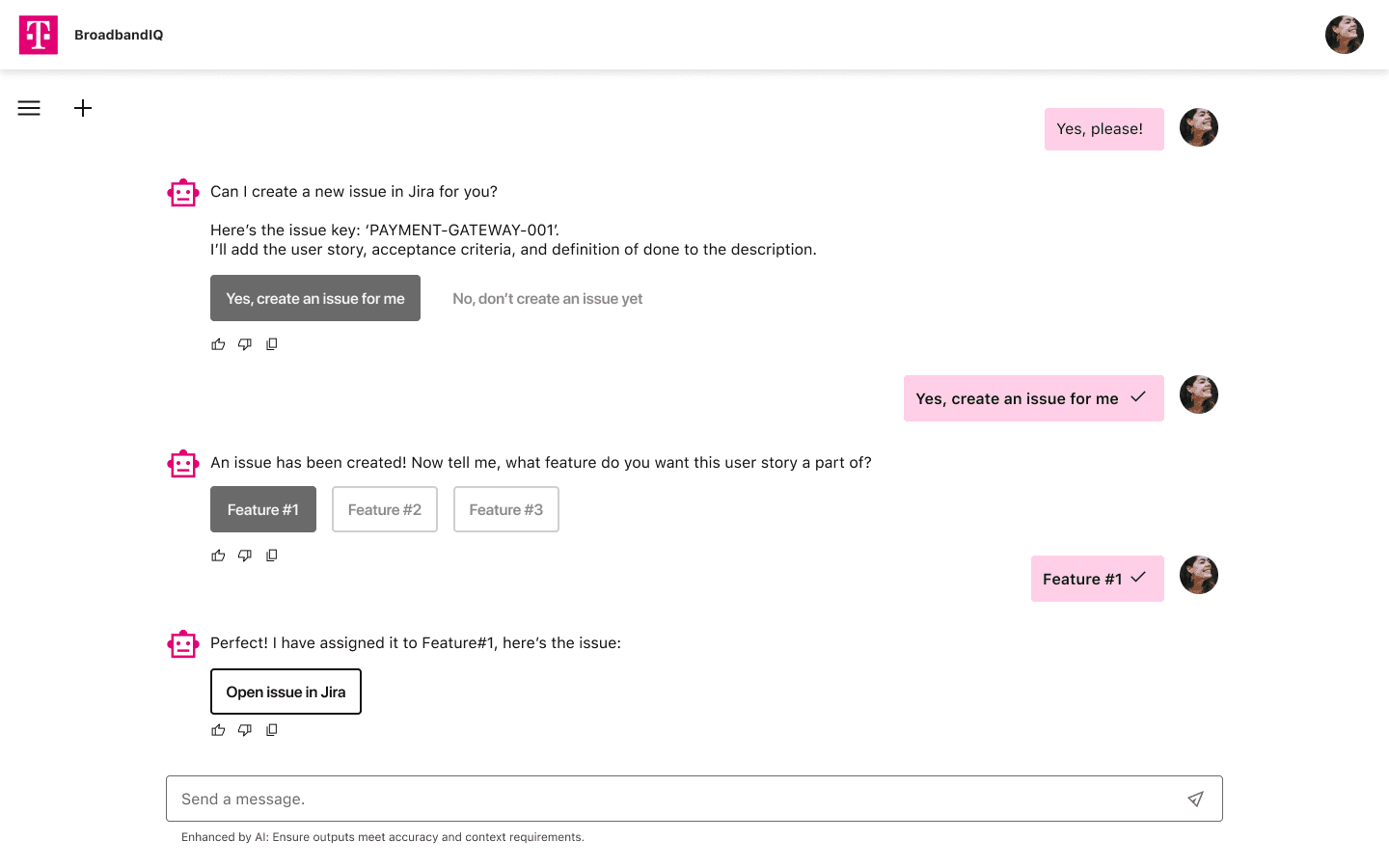
Requesting a new IT project at a large corporation can feel like navigating a maze. Project managers and product owners at T-Mobile struggled to find the right forms, documentation, or next steps to move their ideas forward. Support was overloaded. Processes were fragmented. And the solution on the table (an AI chat assistant) risked becoming just another generic, underused tool if the design didn't earn people's trust from the first interaction. The real challenge wasn't building a chatbot. It was designing a smarter way to access institutional knowledge, cut through bureaucracy, and scale support without losing the human quality that actually makes people come back. Working directly alongside T-Mobile's Service Design research team, I immersed myself in how users actually moved through internal processes: what they searched for, where they got stuck, and what made them abandon the system and ask a colleague instead. That research shaped everything from the conversation flows to the tone of the assistant's responses. We delivered an AI-powered chat interface that guided users through project requests through natural conversation, integrated with existing IT tools to surface real-time updates, and reduced dependency on manual support through self-service flows that felt intuitive rather than clinical. The entire experience was built on T-Mobile's design system, ensuring it felt native to their environment rather than bolted on.


Impact
Faster response times for internal requests, a measurable reduction in repetitive inquiries handled by human support, and a foundation for AI-powered tooling that the organization could actually build on rather than work around.